

The Sweet Disorientation of Seasick
Imperial Teen's pop masterpiece (too) quietly turns 30.


There are albums that sound “ like the ‘90s,” and then there are albums that sound like the idea of the ‘90s if the decade had spent less time buying cargo shorts and puka shells at the mall and more time flirting outside all-ages clubs.
Seasick, the 1996 debut from Imperial Teen, belongs firmly in the second category. In my mind, it’s one of the great indie-pop records of its era: sly, glamorous, emotionally scrambled, catchy enough to burrow into your skull for decades, and just weird enough to avoid becoming anybody’s “commercial breakthrough.” It also just flat-out rocks.
I just did a quick Google Search and nobody, and I mean literally nobody wrote about the 30th anniversary this month of what I consider one of the best alternative albums of the ‘90s, and while I get it (read on), man, someone has to.
I caught wind of the band in the most correct possible way: on a mixtape. An actual cassette tape. A friend, J.W., gave me a tape1 that included “Water Boy” alongside Pixies, The Rentals and Built to Spill.
Honestly, that whole chain of transmission feels deeply appropriate for Imperial Teen. Post-Nirvana, a lot of the indie stuff that came before and a few years later seemed to be discovered socially, through local legends, tastemakers, dubbed Maxell tapes, and friend networks. You didn’t encounter a band like Imperial Teen via radio or an algorithm gently suggesting that “you may also enjoy emotionally this complicated indie pop.” You heard them because some cooler, stranger person than you slipped a tape into your hand and said, essentially: trust me2.
At least that was my experience.
Anyhow. “Water Boy” is such a perfect mixtape song. It’s quick and distorted and loud. I had to hear more. What I got was what Q Magazine called a “lo-fi mix of Californian psychedelia, trash punk riffage and instant pop hooks....hazy, good humoured goofiness and thrashy, angst-ridden chords.”
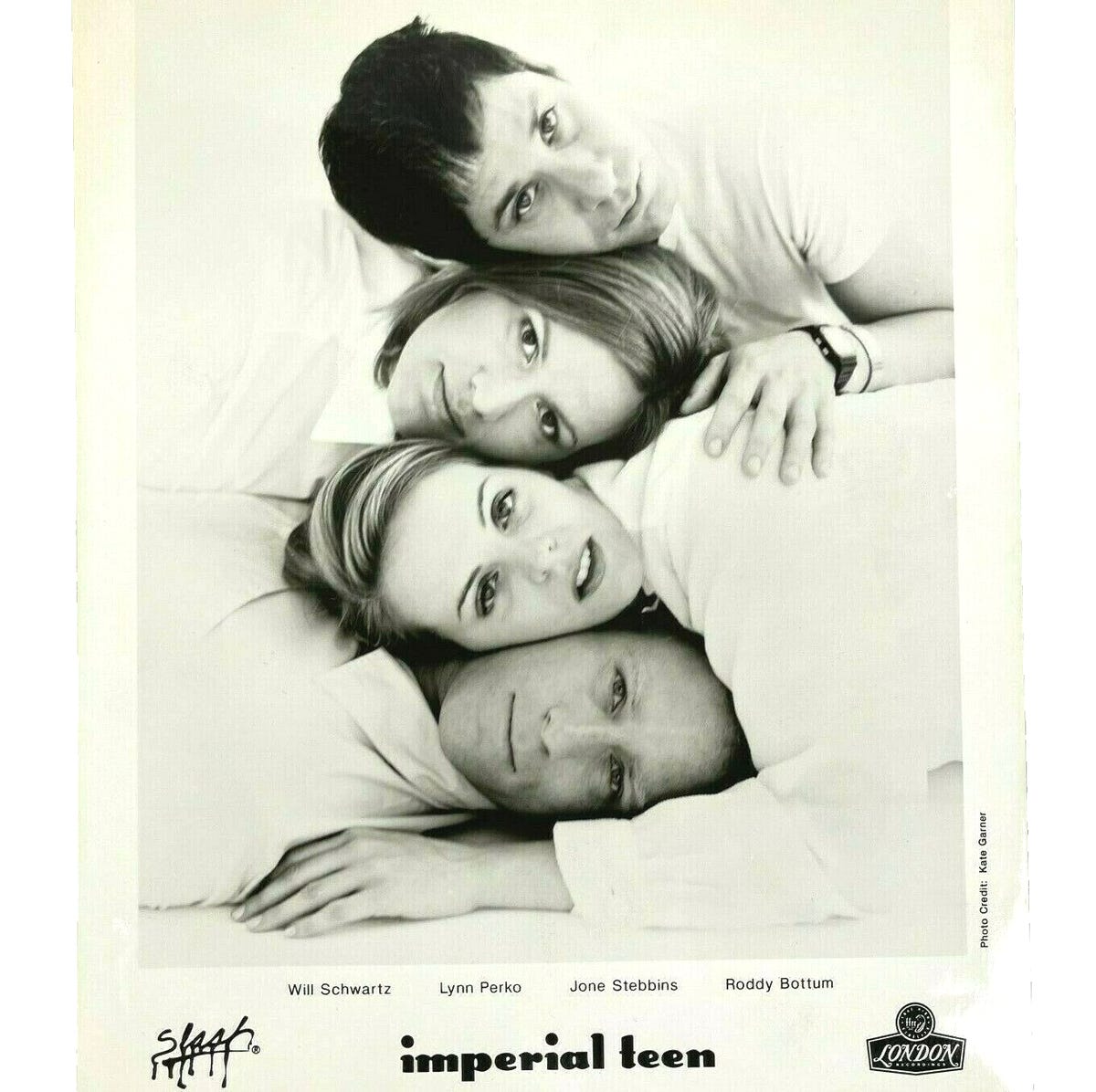
Imperial Teen formed in San Francisco in the mid-’90s. Keyboardist and singer Roddy Bottum was already known from Faith No More, which meant at least one member had previously spent the early ’90s inside one of alternative rock’s strangest accidental mainstream successes. But Imperial Teen felt almost deliberately anti-macho, bright where Faith No More were abrasive, intimate where that band was theatrical.
Alongside Bottum were guitarist/vocalist Will Schwartz, drummer/vocalist Lynn Perko Truell, and bassist/vocalist Jone Stebbins. The key to the whole operation, arguably, was that everyone sang. Not in the wholesome “drunk friends around a campfire” way, but in overlapping, conversational bursts. Indie designed by people who loved passive aggression, or ABBA by way of Pixies. That four-way vocal chemistry is all over Seasick. Songs don’t unfold so much as ricochet between personalities.
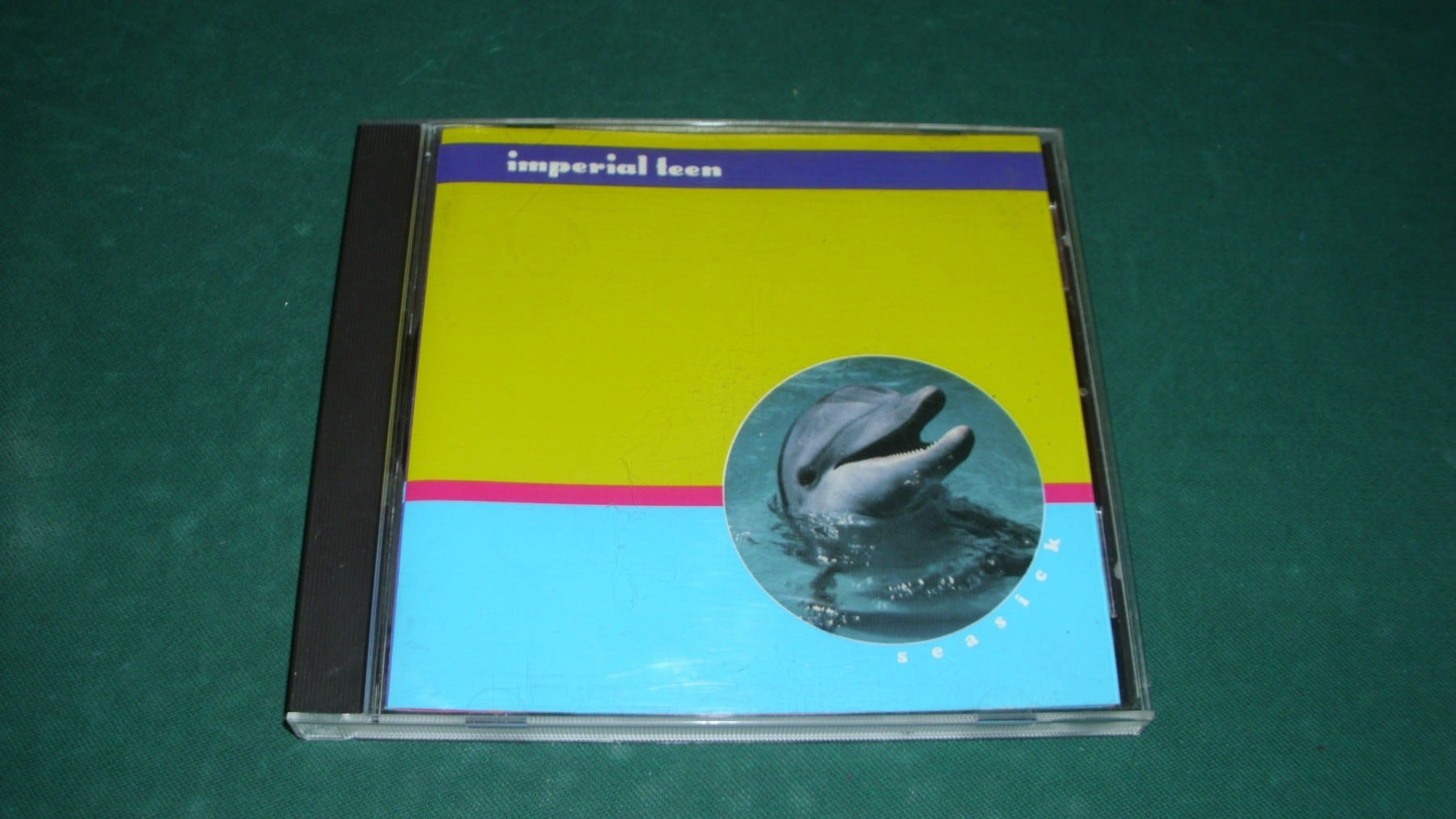
The album opens with “Imperial Teen3,” featuring sly glamour, emotional ambiguity, eventual fuzz and conversational vocals that feel half-flirtation, half-social warfare.
Immediately following is the aforementioned “Water Boy,” which immediately establishes the band’s central magic trick: disguising razor-sharp songwriting as something tossed off in ten minutes while somebody sat on an amp eating candy bought at a gas station. My ears still ring from listening to “Bow down to me, bow down, yeah baby, baby” as loud as the stock speakers in my ‘97 Chevy Cavalier would allow.
I won’t go track-by-track, but honestly, listening to the record right now, it’s all bangers. “You’re One”, the one with the music video and arguably one of the best indie-pop singles of the decade. Maybe ever. Probably ever. It’s built around a chorus so simple and direct that it almost feels accidental. You hear it once and suddenly you’re wandering through your kitchen three days later muttering “you’re one…” and “peace and love and empathy…” to yourself like you’ve been lightly hexed.
Beneath all the wit and occasional stylish detachment, Seasick is full of bruised feelings and emotional honesty, not unlike the other and more conventional answer to what is the indie-pop album of 1996. The songs are packed with longing, insecurity, crushes, jealousy, and emotional negotiations so small they’d barely qualify as “drama” in a different band’s hands. Here, they become entire universes. “Pig Latin,” the ballad, is basically my whole deal, at least deep down.
Revisiting the album now, one of the most fascinating things is how long it took me to clock how openly queer it is. Completely off my radar in the ‘90s, but the flirtation, the gender play, the emotional codes, the campy glamour, the way desire shifts perspectives without explanation or apology, it’s all there. Christagu clocked it immediately: “Coy about their Faith No More link, which leaves no mark on their hand-crafted jangle-pop. Not so coy about their gay subtext, which--well, as they say themselves, ‘our subtext is our plot.’ A painful one, too.”
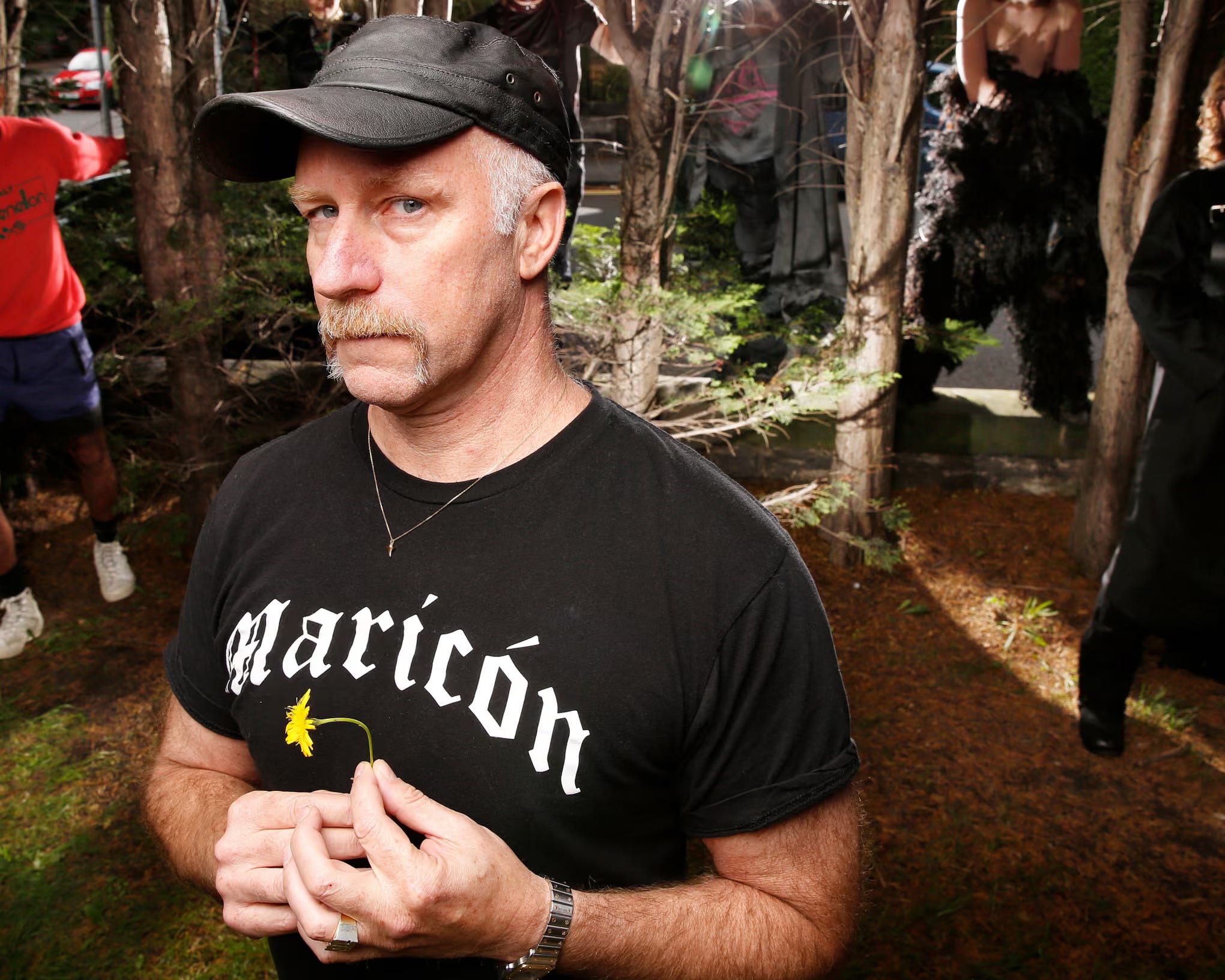
Roddy Bottum was one of the few openly gay figures connected to major alternative rock in that era. But Imperial Teen didn’t approach queerness as “issue-oriented” songwriting. There are no big declarations4 or heavy-handed identity anthems. Instead, Seasick treats queer perspective as completely normal, completely woven into the fabric of the album’s social world.
That may actually be why younger listeners in the ’90s could miss it. Or at least why this then-sheltered smalltown boy did. In retrospect, that ambiguity feels incredibly queer in itself, at least when tethered to its era. But Seasick is full of side-eye, understatement, theatrical coolness, and emotional exaggeration delivered with a smirk. Not a joke band, more like “the funniest person at the party quietly saying something devastating while staring into their Solo cup” funny.
But there’s a “sad but rad” energy that does come through. As SPIN5 wrote in ‘96, shortly before putting at #4 on their albums of that year, “the happy/sad lyrics draw you in with abstract intimacy...”
There’s a bit of lore, as the kids say, connecting parts of Seasick to Kurt Cobain. My research could be a bit off on this one, but apparently “Butch,” containing the lyric “death is worth the price of fame.”
But elsewhere, including a New York Times reference repeated in later bios, “You’re One” has also been described as “the song about Kurt Cobain.” Honestly, both interpretations make sense. “Butch” feels spiritually tied to Cobain because it’s loaded with gender tension and queer subtext. “The prince wants to be a queen” remains one of the album’s most revealing lines, and Cobain himself famously challenged macho rock culture, spoke publicly about homophobia, and had a kind of yearning relationship to femininity and queerness in his art and presentation.
At the same time, “You’re One” absolutely carries Cobain’s shadow too. The loud/soft dynamics, the raw emotional desperation, the way desire and pain blur together. It feels deeply post-Nirvana. One critic even described it as “the fulfillment of Kurt Cobain’s queer envy.”6
Another song that sticks out to me is “Luxury,” which opens thusly:
“I licked the lap of luxury
Bit off enough to chew
I love the taste of anything
That I can spit at you
I feel bad to be good
And so misunderstood
About bad and what’s good
And what’s misunderstood
To be had is too good
To be misunderstood
It’s just sad that I don’t have a friend.”
Later in the song, that line becomes “It’s just sad that I don’t have a gun.”
The emotional complexity may also explain why Imperial Teen never fully broke through commercially. Arguably, by 1996 alternative rock had already hardened into recognizable commercial lanes: post-grunge angst, pop-punk brattiness, Lilith Fair earnestness, electronic cool. Imperial Teen didn’t fit quite any of them. Perhaps they were too pop for indie purists, too queer and sly for mainstream alt-rock radio, too emotionally ambiguous for commercial pop, and too funny to benefit from the “serious artist” mythology that helped a lot of ’90s bands. Afterall, it took Weezer several years to climb back to the top after Pinkerton flopped.
Thankfully, Imperial Teen kept quietly making solid albums, the kind that maybe inspires lifelong attachment rather than mass conversion. I think they could have a bigger audience, but it doesn’t help that an album this good basically doesn’t even exist thirty years later. What I wouldn’t give for this on vinyl and streaming.
Seasick originally came out through the tangled ’90s major-label ecosystem of Slash and London Records, apparently exactly the kind of catalog territory where rights issues, mergers, and neglected licensing agreements can leave beloved albums digitally orphaned. What kept me writing about the album last year when I highlighted 50 that mattered to me perhaps the most was that it’s not available in a record store and it’s not on any major streaming platforms. While they have their fans, they’re apparently not commercially gigantic enough for corporate catalog departments to aggressively maintain their streaming presence. And, ironically7, the band’s sensibility feels more contemporary now than it did in 1996. A younger audience discovering Seasick today would probably hear it less on the wavelength of the songs from its era that have stuck around and more for what it is: the kind of album attached to friends, rooms, tapes, drives home, nicknames, heartbreaks, local legends, and entire emotional eras of your life.
Where a streaming recommendation says: “listen to this,” a mixtape said “this reminds me of you.”
Thirty years later, Seasick still sounds like discovering the coolest band in the world because somebody weird and trustworthy handed me a cassette.
J.W. had gotten it from our friend “Big Time” Bouman, who later began calling himself “Bad Guy” Bouman — the joke being that he’d turned heel. He still goes by Bad Guy, or at least last I heard.
Quick shout-outs to the other kids that helped shape my taste in that era: Colin (who would end up in Russian Circles), Jordan, Josh, Fuzz, Josiah and AVL.
Around 2003, J.A. and I wrote a script that eventually evolved into his student film. It followed two teenagers trying to start a band while obsessing over finding a name that could also work as a song title. In the process, they reference Imperial Teen, Belle & Sebastian and Talulah Gosh as the gold standard.
Maybe belting “I like you!” over and over again on “Butch” counts.
At this point I’ll admit I couldn’t find direct links to Spin or Q, rather getting the pull quotes from a hopefully-accurate Facebook post from a decade ago. It was from Imperital Teen’s social media, so let’s assume it’s all correct.
There’s also lines about “shooting up the enemy,” perhaps a reference to Cobain’s drug addictions.
I think? The word itself has always eluded me, but I am leaving it in. I listen to the wind, to the wind of my soul. Where it takes me, only Alanis really knows.