

In Which I Still and Forever Want My MTV
From music channel to cultural engine: a look at MTV’s original-programming era.

When MTV landed on the moon1 it was just music videos, which in the early ’80s probably felt like the future.
Most of Gen X thinks of this as the pinnacle of the network and probably television. But by the mid-’90s, the future had evolved into something stranger and in my mind, much better. And mostly just to survive. The move into original, non-music programming wasn’t a sudden betrayal of its mission so much as an acknowledgment of reality.
Music videos were short, expensive, controlled by the record labels, and easy to tune out of, literally. MTV needed programming that could hold attention, create habits, and give the channel an identity beyond flashy delivery system for the music industry.
The first step was realizing that their real product wasn’t arguably videos, but youth culture. Music was just the most visible expression of it. The comedic game show Remote Control (featuring a pre-SNL Adam Sandler) quietly tested this theory by treating pop culture itself as content, while early specialty programs like Yo! MTV Raps and 120 Minutes reframed the network as a curator rather than a jukebox, or what the kids might liken to Spotify on radio. Audiences didn’t just want songs; they wanted context, attitude, and a sense that someone on the other side of the screen understood them.
The channel began treating television the way it treated music, as something to remix, interrogate, and occasionally blow up entirely. That instinct is what made MTV in the '90s feel less like a network and more like a voice speaking directly to its audience. Or at least directly to me. By the early ‘90s and throughout the rest of the decade it seemed less something I watched and more something I lived.
It helped that mainstream rock arguably got temporarily great around the same time2. But between music videos, Jay and Silent Bob and an obnoxious cab driver talked about music videos. And before the top of the hour, anchors like Kurt Loder and Serena Altschul gave us MTV News, a segment I held in as high regard as my parents did 60 Minutes. It informed us of elections, wars, and whatever Guns ‘N Roses had going on. It all seemed pretty important.
Before streaming algorithms decided who we were, MTV did. I joke about getting teary-eyed thinking about Singled Out, but I’m only kinda joking. That show was absurd, people choosing dates based on whether someone liked pizza or believed in aliens, but it was also pure MTV logic, treating romance like pop culture trivia, which is how most teens and twenty-something were already experiencing it anyway. And 30 years later, I am still unable to put how enamoured I was with Jenny McCarthy. It was a weird time.
I choose to believe that MTV understood that goofiness could be a delivery system for something smarter, rethinking how dating shows worked. Like much of my favorite art, MTV didn’t draw hard lines between dumb and smart. It proved that the most radical thing a network could do was not take itself too seriously while still taking its audience seriously. Possibly the network’s boldest and most influential transformation would reflect that. Long before reality TV became an industry standard, MTV pioneered a version of it that felt intimate, unscripted, and culturally revealing when seven strangers were picked to live in a loft, have their lives taped, to find out what happened when people stopped being polite, and started getting real.
Debuting in 1992, The Real World was groundbreaking not because it was flashy, but because it was honest, or at least that’s how it felt at the time. By placing a diverse group of young strangers in a shared living space and letting the cameras roll, MTV created a forum for conversations about race, sexuality, politics, AIDS, addiction, and relationships that were rarely if ever seen on television. People also got into arguments about peanut butter and had sex in hot tubs. And that begat Road Rules, which begat The Real World/Road Rules Challenge, which begat a grown man getting carried on his back by another grown man in a shocking reverse-tug-of-war-feat of strength.3
But before it became admittedly more of a spectacle, The Real World trusted viewers to sit with ambiguity and conflict. The show proved that youth-oriented television could engage serious issues without sacrificing relevance or immediacy. Just as importantly, The Real World and Road Rules were a space for identity exploration. It offered visibility to LGBTQ+ voices and alternative subcultures rarely seen elsewhere. The results were imperfect, sometimes messy, but undeniably meaningful.
Other shows took their cues from the music videos. Rapid editing, bold graphics and experimental camera work gave the network an energy that felt closer to zines or music mags than traditional television. The aesthetic chaos mirrored how youth consumed, jumping between channels, sounds, styles, and ideas. Rather than fighting that fragmentation, MTV embraced it. It felt alive, constantly in motion. This would make perhaps the most sense with animation, perfect for a post Music Television, and post-Simpsons, world.
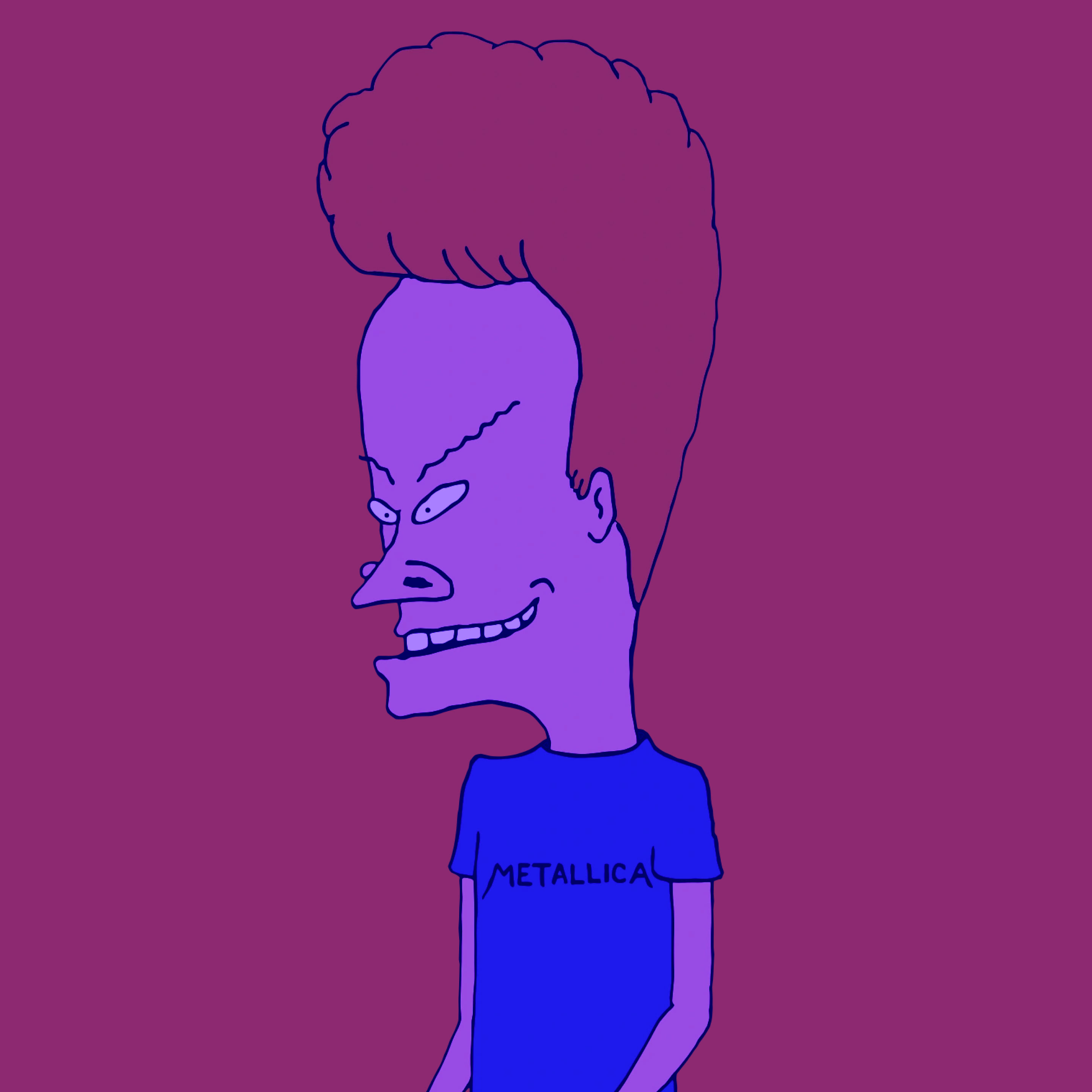
Liquid Television might be the single most important creative incubator MTV ever produced, an anthology of animation that would introduce us to a lot, including Beavis and Butt-Head, possibly the greatest thing to ever happen to television. Blurring the line between commentary and content, the animated duo didn’t simply introduce videos; they mocked them and gave voice to a specific kind of disaffected teenage humor. Occasionally Beavis and Butt-Head seemed almost too smart when watching music videos, likely a byproduct of creator and voice actor Mike Judge4 improvising over them for hours, his own opinions bleeding into the normally-abnormally dimwit’s minds.
Still, it made the channel self-aware, irreverent, and even subversive. Those qualities resonated deeply with Gen X, and helped shape the following generation (mine). That it terrified squares was a bonus. The show would produce the spin-off Daria, a deadpan counterpoint to louder MTV programming. It spoke directly to alienated, intelligent teens and became one of the most enduring portrayals of female adolescence on television5.
MTV’s comedy wasn’t all animated. Two of its biggest breakthroughs were The Jon Stewart Show, which gave us, well, Jon Stewart. And then there was The State, a sketch show that was aggressively weird without apologizing for it. Its influence runs through modern alt-comedy, ensemble-driven humor, and the idea that television could reward intelligence, repetition, and inside jokes rather than broad punchlines.
The MTV Music Video Awards were the clearest sign that MTV understood music videos as film and as culture, not just disposable content. The later addition of the MTV Movie Awards followed the same logic. The awards meant little in terms of industry validation6, but they created moments that mattered culturally, like having Quentin Tarantino present a lifetime achievement award to Jackie Chan or anointing Wes Anderson as Best New Director before either fit comfortably into traditional Hollywood hierarchies. A year after winning, Anderson would produce segments for the awards starring The Max Fisher Players, forever preserved in the Criterion Collection.
I won’t pretend television was better as a whole in the 90s than its been in the twentieth century. That notion is absurd and wholly rooted in nostalgia. We didn’t have Mad Men or Breaking Bad or The Wire. But MTV was.
2000 did give us Jackass, starring a nomadic band of fearless, pain-defying and some would say unwell jesters that taught us that if we are going to be dumb, then too we must also be tough. The show anticipated YouTube and viral videos, and influencer-era stunt comedy. Nothing on TV looked like it and a whole lot borrowed from it.
But then we started to see watered-down versions of what came before: Next, The Jersey Shore, and of course, Ridiculousness. The innovation didn’t disappear so much as the conditions that once made it possible unfortunately slowly eroded. Reality franchises were cheap, reliable, and easy to repeat, while experimentation became riskier and harder to defend inside a ratings-driven system. Innovation simply stopped paying, just like it had years prior with music videos. At some point it became cheaper and easier to just have less-cool hosts show people Internet clips MTV didn’t even have to make.
What’s most painful isn’t that MTV changed, but that it once proved television could feel like discovery. It trusted its audience enough to take risks, to be weird, to occasionally fail, even. That version of MTV is long fucking gone. And while culture has moved on, basically to TikTok, it’s hard not to miss the feeling of turning on the TV and believing, even briefly, that anything might happen next7.
Monday’s essays are free for now and currently half-off, only $25 for the entire year.
I spent about a half hour searching for an old Yahoo! Answers post I saw about a decade ago (or more) where someone had asked if MTV had actually sent Neil Armstrong to the moon. Really bummed I couldn’t find it.
There’s a strong argument for this of course, but I also know that all music peaked for everyone sometime around high school and/or college.
CT Tamburello, originally from The Real World, would go on to be a five-time winner of The Challenge, as well as a winner on both seasons of its spin-off, Champs Vs. Stars and the second season of The Traitors. Sportswriter and Boston native Bill Simmons jokingly called Tamburello, along with Larry Bird and Bill Russell, one of the city’s “greatest athletes.” Simmon’s site, The Ringer, later named Tamburello the best reality star of all time.
Among other things, Judge would also give us Office Space, Idiocracy and Silicon Valley. He is perhaps our greatest satirist.
There was also My So-Called Life, which found new-life in reruns on MTV following its cancelation.
It’s not called the ME-GOT, though if it were, the sole person to accomplish that: Whoopi Goldberg.
“Next, on Sick Sad World…”